Why Students Leave Coaching Institutes — 7 Real Reasons
Wondering why students leave coaching institutes? Learn the seven biggest reasons students drop out and how better communication, engagement, and coaching management can improve retention.

Why Students Leave Coaching Institutes — 7 Real Reasons : Many coaching institute owners assume that students discontinue classes because of high fees or financial problems. While cost can influence a decision, it is rarely the only reason.
Understanding why students leave coaching institutes requires looking at the complete student experience. Teaching quality, communication, personal attention, class management, progress tracking and parent involvement all affect whether a student continues or drops out.
Students may not always explain their dissatisfaction clearly. Some gradually stop attending classes, some move to another institute, while others complete the current month but do not renew their admission.
For a coaching institute, every dropout means lost revenue, reduced referrals and a possible decline in reputation. Improving student retention is therefore just as important as attracting new admissions.
Here are seven real reasons students leave coaching institutes and practical ways to address them.
1. Students Do Not Receive Personal Attention
Students join coaching institutes because they expect additional academic support that they may not receive at school or college. When classrooms become overcrowded, individual students can easily feel ignored.
A student may hesitate to ask questions in front of everyone. If teachers do not notice learning gaps, the student may continue attending classes without understanding the subject properly.
Over time, frustration increases. The student starts believing that the coaching programme is not helping and may decide to leave.
How coaching institutes can improve
Teachers should regularly identify students who are struggling with particular topics. Short doubt-clearing sessions, personalised feedback and smaller discussion groups can make students feel supported.
Institutes can also maintain individual academic records to understand each student’s attendance, test performance, strengths and weak areas.
Personal attention does not always require one-to-one classes. Even a short monthly review can make students feel that their progress matters.
2. Poor Communication Creates Confusion
Communication is one of the biggest factors behind student satisfaction.
Students may miss important information about class timings, examinations, assignments, schedule changes or fee deadlines. When communication is inconsistent, students and parents become frustrated.
Using separate WhatsApp groups, handwritten registers and individual phone calls often creates confusion. Important messages may get buried, delivered late or missed completely.
Poor communication also makes an institute appear disorganised, even when the teaching quality is good.
How coaching institutes can improve
All academic and administrative updates should be communicated through an organised system.
Students should receive timely notifications about:
- Class schedules
- Test dates
- Assignment deadlines
- Attendance shortages
- Fee reminders
- Holiday announcements
- Doubt-clearing sessions
A coaching management platform such as Eduvora360 can help institutes centralise communication and reduce the dependency on scattered messages and manual follow-ups.
3. Teaching Quality Is Inconsistent
Another major reason why students leave coaching institutes is inconsistent teaching quality.
A student may join after attending an impressive demo class, but the regular classes may not provide the same experience. Frequent teacher changes, unplanned lessons, outdated study material and lack of subject clarity can reduce confidence in the institute.
Students usually stay when they can clearly see academic improvement. If lessons feel rushed, repetitive or difficult to understand, they may start searching for better alternatives.
How coaching institutes can improve
Institutes should create a structured academic plan for every course. Teachers should know what needs to be covered each week and how student understanding will be evaluated.
Management should also collect regular student feedback without waiting for complaints.
Questions can include:
- Are the concepts explained clearly?
- Is the teaching pace comfortable?
- Are doubts resolved properly?
- Are tests aligned with the syllabus?
- Is the study material useful?
Continuous teacher training and academic reviews can help maintain consistent quality across batches.
4. Students Cannot See Their Progress
Students remain motivated when they can see measurable improvement.
If an institute conducts classes without regular assessments, students may not know whether they are improving. Parents may also remain unaware of attendance, test scores and academic challenges.
This lack of visibility can create doubt about the value of the coaching programme.
Even hardworking students can lose motivation when their progress is not acknowledged. On the other hand, weaker students may continue falling behind because no one identifies the problem early.
How coaching institutes can improve
Institutes should conduct regular tests and share clear performance reports with students and parents.
Progress reports can include:
- Test scores
- Subject-wise performance
- Attendance percentage
- Strong and weak topics
- Comparison with previous tests
- Recommended improvement plan
Digital dashboards can make progress tracking easier. When students can view their improvement over time, they are more likely to stay engaged and continue their course.
5. Administrative Problems Affect the Student Experience
Students do not judge a coaching institute only by its teachers. They also notice how efficiently the institute manages admissions, attendance, fees, schedules and enquiries.
Long waiting times, incorrect fee records, repeated payment reminders, lost receipts and sudden timetable changes can create a negative experience.
Parents expect professionalism when they invest in coaching. Administrative mistakes may reduce their trust, even if the institute provides good academic support.
How coaching institutes can improve
Coaching institutes should reduce their dependence on manual registers and disconnected spreadsheets.
A centralised coaching management system can help manage:
- Student admissions
- Fee collection
- Payment records
- Attendance
- Batch allocation
- Class schedules
- Examinations
- Parent communication
Automation does not replace personal interaction. It removes repetitive administrative work so staff can focus on students and parents.
6. Classes Are Not Engaging Enough
Students may leave when classes become monotonous or overly theoretical.
Today’s learners are exposed to video lessons, interactive applications, online quizzes and visual content. If classroom teaching only involves dictation or one-way lectures, students may lose interest.
Low engagement often appears as irregular attendance, incomplete assignments, reduced participation and poor test performance.
Institutes sometimes treat these signs as a lack of discipline. However, they may indicate that the learning experience needs improvement.
How coaching institutes can improve
Teachers can make lessons more engaging through:
- Short quizzes
- Real-life examples
- Visual explanations
- Practice activities
- Group discussions
- Weekly challenges
- Question-based learning
Institutes should also recognise student achievements. Appreciation for improved attendance, better test scores or consistent assignment completion can motivate students to continue.
Engagement increases when students feel involved rather than treated as passive listeners.
7. Parents Do Not Receive Regular Updates
For school-level coaching, parents play an important role in admission renewal and long-term retention.
Parents may withdraw a student when they do not receive updates about attendance, discipline, performance or academic progress. Without regular communication, they may assume the institute is not closely monitoring the student.
Problems become more serious when parents are contacted only for fee payments.
This creates a transactional relationship instead of building trust.
How coaching institutes can improve
Institutes should communicate with parents throughout the student journey.
Useful updates can include:
- Attendance alerts
- Test results
- Teacher feedback
- Improvement areas
- Course completion status
- Upcoming academic activities
Parent meetings can be scheduled monthly or quarterly depending on the course duration. Digital parent portals can also provide access to academic information without requiring repeated phone calls.
When parents understand the value being delivered, they are more likely to continue and recommend the institute to others.
How Coaching Management Software Improves Student Retention
Managing student retention manually becomes difficult as an institute grows. Teachers, counselors and administrative staff may have information stored in different places.
Eduvora360 can help coaching institutes create a more organised student experience by bringing admissions, attendance, fees, academic records, communication and performance tracking into one system.
With centralised information, institutes can quickly identify:
- Students with low attendance
- Pending fee follow-ups
- Declining test performance
- Unresolved enquiries
- Students requiring academic support
- Parents who need an update
Early action is important. A student who has already decided to leave is harder to retain than a student showing the first signs of dissatisfaction.
Final Thoughts
Understanding why students leave coaching institutes is the first step towards improving student retention.
In most cases, students do not leave because of one major problem. They leave after experiencing several smaller issues, such as poor communication, weak academic tracking, limited personal attention or administrative inconvenience.
Coaching institutes can reduce dropout rates by listening to students, communicating with parents, monitoring performance and creating a structured learning experience.
Attracting new admissions is important, but retaining existing students builds stronger revenue, better results and long-term credibility.
With the right teaching practices and an organised coaching management system like Eduvora360, institutes can improve satisfaction, strengthen parent trust and help more students complete their academic journey successfully.
Frequently Asked Questions
Why do students stop attending coaching classes?
Students may stop attending because of poor teaching quality, lack of personal attention, schedule issues, weak communication, low engagement or limited academic improvement.
How can coaching institutes improve student retention?
Institutes can improve retention through regular progress tracking, personalised support, timely communication, engaging classes and consistent parent updates.
Are coaching fees the main reason for student dropout?
Fees can be a factor, but students often leave because they do not see sufficient value, progress or support from the institute.
Can coaching management software reduce student dropout?
Yes. Coaching management software can identify irregular attendance, poor performance, pending communication and other warning signs before a student decides to leave.
Related articles
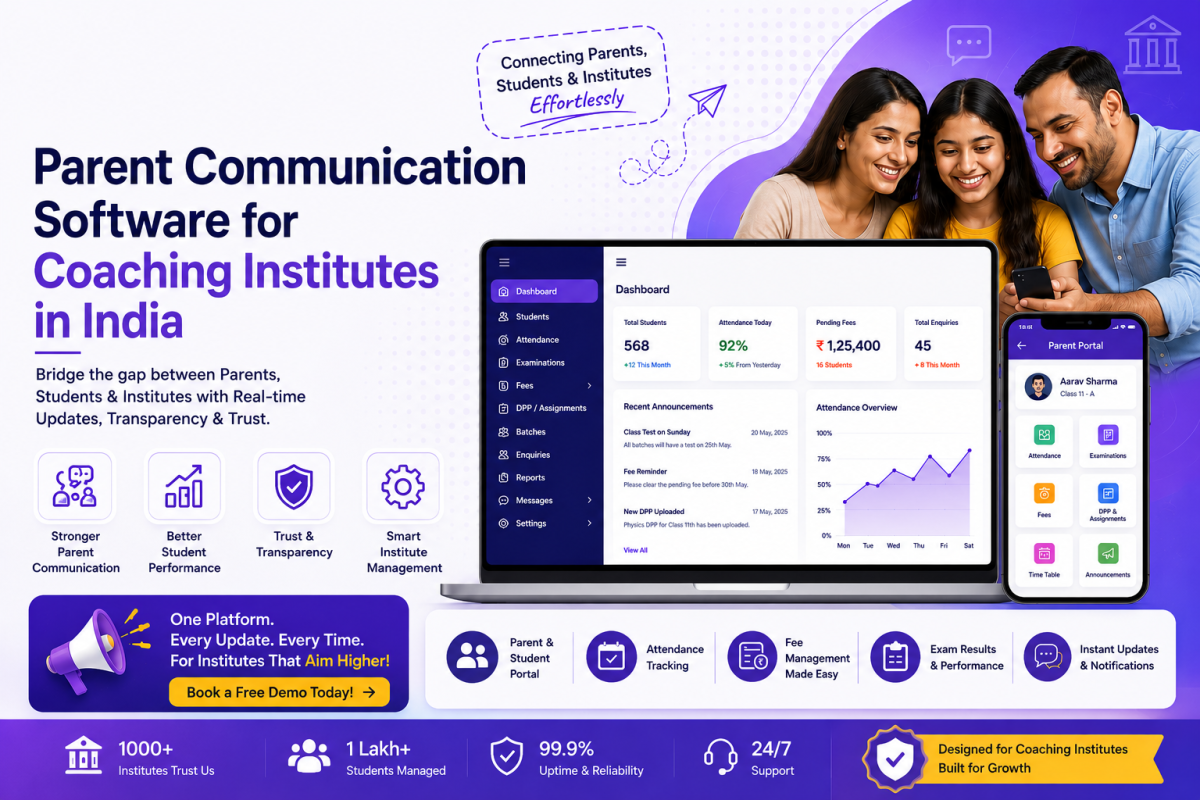


Stop running this on a register and an Excel sheet
Eduvora360 gives the owner, every teacher and every parent their own login — students, fees, attendance, results and a full finance portal, all sharing one dataset.